01
Capture the encounter
Wolnir turns visit context into a structured workspace so clinicians are not rebuilding the story after the patient leaves.
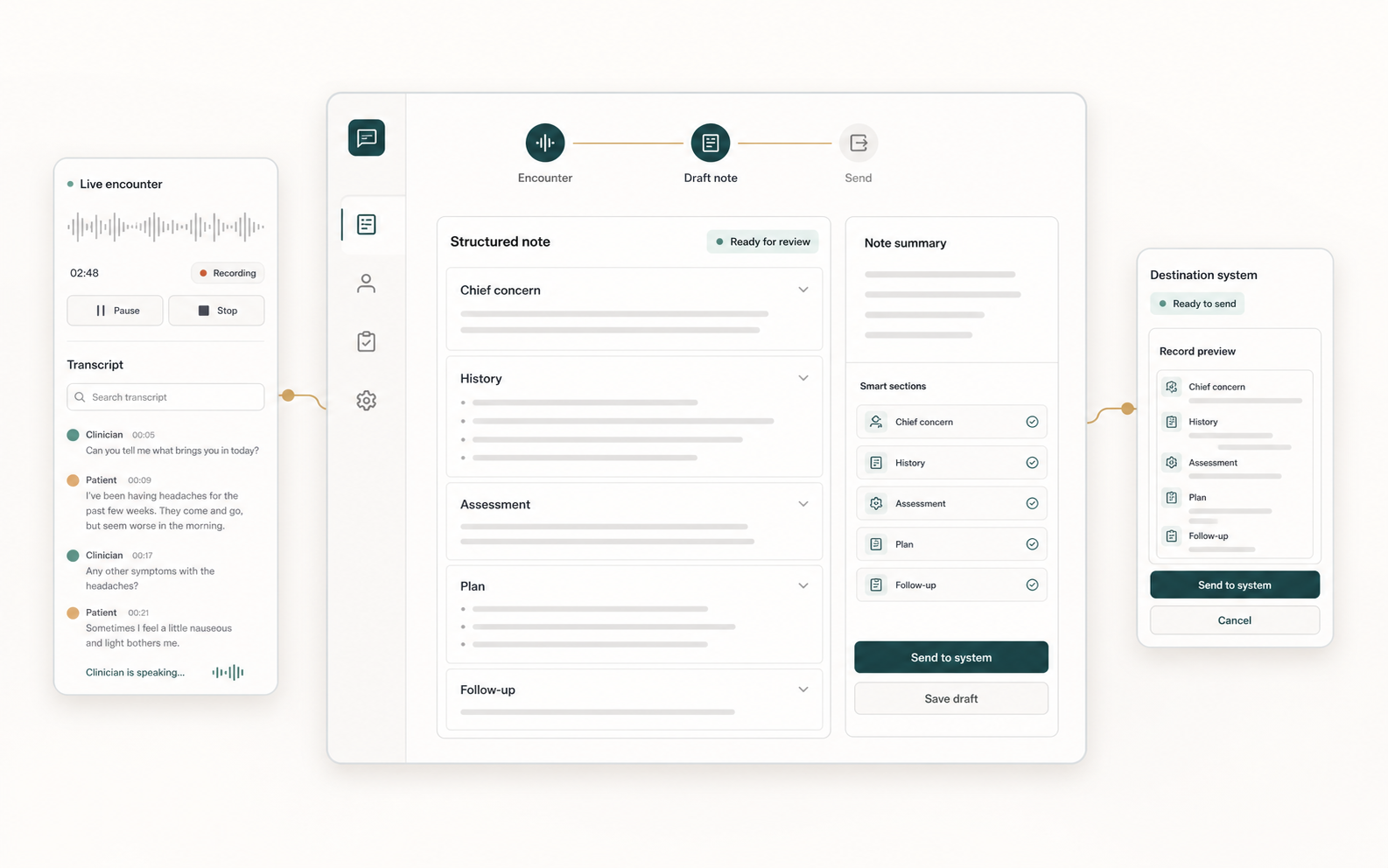
Clinical documentation for modern practices
Wolnir helps medical practices turn patient encounters into review-ready notes and route them toward the systems clinicians already use.
Workflow
Wolnir is designed around the clinical work that already happens: capture the encounter, shape the draft, keep the clinician in control, and prepare the note for the underlying system.
01
Wolnir turns visit context into a structured workspace so clinicians are not rebuilding the story after the patient leaves.
02
Notes are organized around familiar clinical sections, making review faster and keeping documentation patterns consistent.
03
Clinicians stay in the approval loop with clear edit, save, and send steps before anything moves downstream.
04
Approved documentation is prepared for handoff into the destination workflow your practice already depends on.
Enterprise readiness
Hospitals and multi-site practices need more than a note generator. Wolnir keeps implementation, review, and system handoff decisions visible from the first conversation.
Trust posture
Wolnir should be evaluated with each practice's security, privacy, and clinical governance teams before rollout. This page avoids naming certifications or guarantees until they are confirmed.
Map note types, review patterns, and destination-system expectations before introducing Wolnir to teams.
Keep editing, approval, and handoff responsibilities visible instead of hiding clinical decisions behind automation.
Give practice leaders a clearer view of documentation movement without asking clinicians to manage another inbox.
Support security, compliance, IT, and clinical stakeholders with implementation details scoped to the practice.
Practice impact
The goal is not to add another destination. It is to make the path from encounter to approved note feel more controlled, consistent, and operationally visible.
Clinicians can spend less time reconstructing visits across systems and more time reviewing the note that matters.
Practice teams get a more predictable path from encounter context to approved documentation.
Leaders can reinforce local note structure without forcing every clinician into the same rigid workflow.
FAQ
Wolnir should meet the operational standards of the practice it serves. These answers keep the public page honest while leaving room for implementation-specific detail.
No. Wolnir is positioned as a documentation workflow that helps prepare and route notes toward the systems your practice already uses.
Yes. The landing experience should reflect Wolnir's review-first posture: draft, edit, save, and send are treated as distinct steps.
Integration details should be confirmed during implementation planning so the workflow matches the practice's current environment.
Access, retention, review responsibilities, and downstream handoffs should be scoped with each practice before rollout.
Book a demo
Walk through how Wolnir can support your practice's path from patient encounter to review-ready note and system handoff.